
Certified Business
With over 10000+ orders
With over 10000+ orders
It doesn't happen all the time, but under certain conditions, a dehumidifier can make you sick, especially if you have allergies or asthma, or are sensitive to dust, mold, or changes in air quality.
Usually, when this happens, you start experiencing headaches, coughing, or irritation immediately or a little while after running the dehumidifier. When this becomes a pattern, then you are not imagining things; there is indeed something about the dehumidifier that is contributing to all these symptoms that feel a lot like getting sick.
Luckily, this is usually not a complete health breakdown, and it can be relatively easy to handle. The key is understanding when this can happen, why it happens, and how to fix it before it becomes a real problem.

In most cases where a dehumidifier makes someone sick, the problem is not the dehumidifier itself but how it is used or maintained. Let’s break down the most common causes.
If you are getting a musty smell along with a headache, respiratory irritation, or some allergy-like symptoms when you turn your dehumidifier on, it is very likely because the water in the tank is dirty and needs to be replaced.
The role of the water tank of a dehumidifier is to collect moisture from the air, and when it pools, it creates a perfect environment for bacteria and mold if it is not taken care of. Over time, these contaminants can spread back into the air and cause you to feel sick.
You are most vulnerable to this if you have allergies, asthma, or respiratory issues, or if you have been running the unit for long periods without cleaning.
If you experience persistent coughing, sneezing, eye irritation, or allergy symptoms after using a dehumidifier, there is likely mold inside the unit. This happens when moisture builds up inside internal components (like coils or filters), causing mold to grow and circulate through the air.
Mold inside a dehumidifier is likely to make you sick if you are already pretty sensitive to mold, live in a humid environment, or have the dehumidifier set up in a home with poor ventilation.

If your sinuses become irritated, your throat goes dry, and you experience nosebleeding, your humidifier has likely been running for a long time air has likely become too dry. A dehumidifier that runs too aggressively can reduce humidity below comfortable levels (generally below 30%). When this happens, the dry air starts to irritate your respiratory system.
This is a huge risk if you are already prone ot sinus issues, live in a dry climate, or have the habit of leaving your dehumidifier running for long periods without monitoring the humidity levels.
A dehumidifier doesn’t bring in fresh air; it just removes moisture. In a closed space with poor airflow, air can become stale. When this happens, you usually get symptoms like fatigue and mild headaches.
Poor air circulation is a risk for anyone running the unit continuously without ventilation, especially if you are running the dehumidifier in a small room or an office/ bedroom with closed windows.
Sometimes a dehumidifier causes excessive coughing and sneezing when the filters become dirty or clogged. Usually, this is accompanied by an increase in the amount of dust in the air and an overall reduction in the air quality.
Filters trap dust and particles, but if they’re not cleaned or replaced, they can start releasing those particles back into the air.

If you suspect your dehumidifier is causing symptoms, don’t ignore it. Cleaning removes the most common source of airborne contaminants, but depending on the situation, you may need to monitor its humidity levels, improve the ventilation in your space, or inspect it for mold. Here are some common solutions:
Cleaning should be your go-to solution if a dehumidifier makes you sick. It instantly removes the majority of the sources of airborne contaminants. Take the following steps:
Cleaning our dehumdifier filter helps keep the dust and allergens from recirculating. First, learn how to clean a dehumidifier. Don't forget to rinse or replace filters as recommended, and don’t wait until airflow is restricted before you clean again.
Monitoring the humidity level in your room when the dehumidifier is running helps prevent over-drying, which can irritate your body and cause breathing problems. Aim for 30%–50% indoor humidity. You can use a hygrometer if your unit doesn’t have one
Improving the overall ventilation in your space introduces some fresh air and prevents that “stale” feeling that can sometimes adversely affect your health. Improving the ventilation levels is not that hard, either. You can take simple steps like:
Wrong or improper use of a dehumidifier can also affect your health. Ideally, you want to use the unit in a way that prevents excessive drying and reduces the strain on the unit.
To minimize your risk of falling sick, don’t run the unit 24/7 unless necessary, and use the “auto mode” if available
Inspecting your dehumidifier for mold and cleaning it out automatically eliminates a major health trigger, especially if you are a sensitive individual.
If you suspect internal mold, deep clean the unit and even consider replacing it if it is already severely contaminated.

The quality of your dehumidifier plays a major role in whether it improves your air or contributes to health problems. A high-quality dehumidifier is designed not just to remove moisture, but to do so efficiently, safely, and consistently without creating new air quality issues.
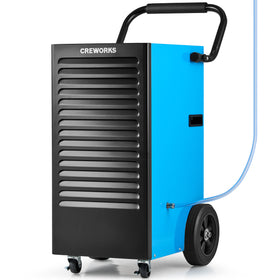
Creworks dehumidifiers are tailored for areas spanning from 800 to 2000 square feet. They are ideal for crawl spaces, basements, garages, and warehouses. From 130-180 ppd units, these dehumidifiers are built to swiftly eliminate excess moisture and musty odors.
Featuring upgraded condenser and evaporator coils, this crawlspace dehumidifier effectively eliminates 70 ppd at AHAM and an impressive 145 ppd at saturation, maintaining a reliably dry environment. The detachable display panel ensures easy adjustment of the timer and humidity levels.
Place your order today to benefit from our discount, and finally eliminate unpleasant odors, unhealthy mold, microbes, and uncomfortable dampness with this efficient room dehumidifier!
If a dehumidifier is making you feel sick, it’s usually not because the concept is flawed; it’s because something isn’t being managed correctly.
Dirty tanks, clogged filters, overly dry air, and poor ventilation are the real culprits. The good news is that all of these are fixable with proper maintenance and usage. A well-chosen, well-maintained dehumidifier should make your space more comfortable, not less. Learn how to use a dehumidifier for a garage.




Leave a comment