
Certified Business
With over 10000+ orders
With over 10000+ orders
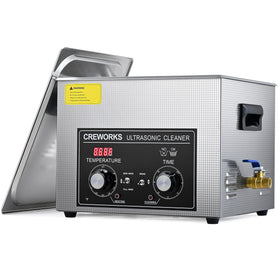
Polident can be used in an ultrasonic cleaner because it is formulated to break down organic buildup (like plaque and stains) and dissolve in water to create a cleaning solution.
When combined with ultrasonic waves, it can enhance cleaning, especially for dental items.
In fact, users have reported that combining Polident with an ultrasonic cleaner is more effective than soaking alone, and it prevents that "funky" smell and removes stubborn buildup.
However, you can only use Polident for a limited number of applications in an ultrasonic cleaner, and there are some potential risks to consider as well.

Not all Polident products are equal in this context. For an ultrasonic cleaner, you want the standard denture cleaning tablets, not the non-abrasive, non-whitening formulas. Avoid any of the following:
Polident is safe for ultrasonic cleaners when you use it for what it was designed for, but not universally safe for everything you might clean ultrasonically.
So, for dentures, retainers, and mouth guards, it is safe to use. However, there is no reason to try to use it for jewelry, delicate materials, or soft plastics, and it is generally not safe.
When used correctly, Polident in an ultrasonic cleaner can be very effective for cleaning dentures, retainers, and mouth guards, and removing organic buildup from different dental appliances. Here are the top four uses of Polident in an ultrasonic cleaning machine.
Polident is specifically designed to remove plaque, bacteria, and stains from dentures. It is an effective solution if you are a daily denture user or anyone wanting a deeper clean than soaking alone.
The polident breaks down saliva buildup and odors while ultrasonic waves reach tight spaces. Great for orthodontic patients and athletes.
The combination of Polident and ultrasonic cleaning targets biofilm effectively. It works for hard-to-clean dental gear.
| Use Polident | Avoid Using Polident |
| Dentures | Fine jewelry (especially soft stones) |
| Retainers | Watches (especially water-resistant ones) |
| Mouth guards | Items with delicate coatings |
| Dental appliances with organic buildup | Electronics or sealed components |
| Items designed for denture cleaners | Anything the manufacturer advises against |
Some users have noted that while the Polident in an ultrasonic cleaner cleans well, using harsh, high-strength denture cleaners daily might cause slight yellowing or accelerated wear (micro-abrasions) on some retainer materials over long periods.
So, even though Polident seems mild, there are a few important risks to consider when using it in an ultrasonic cleaner.

Polident contains active ingredients that break down organic matter. These can react with certain metals or finishes. For non-dental-related materials, you might want to use ultrasonic cleaning solutions or mild dish soap with water.
If not fully dissolved or rinsed, Polident can leave a residue on items or inside the cleaner. Take the following measures if you clean intricate items or use your ultrasonic cleaner rather frequently:
Another problem with Polident in an ultrasonic cleaner is that it can be over-aggressive on some materials. Ultrasonic cavitation already provides intense cleaning. Adding a chemical cleaner can make it too harsh.
If your dental appliances are fragile or older, reduce the number of cleaning cycles or use plain water for the more sensitive items.
Foaming or chemical buildup can interfere with how the machine operates. For anyone who uses a personal ultrasonic cleaner regularly, manufacturer-recommended solutions are usually recommended over dental cleaning solutions.

Many people who use Polident in their ultrasonic cleaners run the device for one cycle (usually 3–5 minutes) while they brush their teeth or eat, and often use 1/2 a tablet to avoid waste.
Too much can cause excessive foaming and residue buildup.
Let the tablet fully dissolve in warm water before placing items inside. Prevents uneven cleaning and residue sticking to items.
Warm water helps activate the cleaning agents. Avoid hot water to prevent warping the plastic.
Limit cleaning time: Run the cleaner for 3–5 minutes per cycle. This shorter duration prevents over-cleaning and material wear.
Always rinse items with clean water after the cycle. Removes any remaining chemical residue.
 Final Thoughts on Polident in an Ultrasonic Cleaner
Polident can absolutely be used in an ultrasonic cleaner, but only when you understand its limits. It shines when cleaning dental items, where it’s both effective and safe. Outside of that, you need to be more selective.
The real key is this: match the cleaning solution to the item you’re cleaning. Do that, and your ultrasonic cleaner becomes a powerful, reliable tool instead of a potential risk.
You might also be interested in tap water in an ultrasonic cleaner, and when it can be a good alternative.



Leave a comment