
Certified Business
With over 10000+ orders
With over 10000+ orders
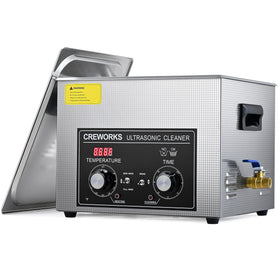
If you’ve just bought an ultrasonic cleaner, or you’re thinking about getting one, it is perfectly normal to have questions about what you can or cannot put in it. One of the most common ones is: Can I just use tap water?
The short answer is yes, you can use tap water in an ultrasonic cleaner, but there are some important nuances. Knowing and understanding when tap water is enough, when it isn’t, and how to use it properly will help you get the best results from your ultrasonic cleaner without unnecessary trial and error.

You can put tap water in an ultrasonic cleaner, and in many cases, it works perfectly well. The primary reason tap water works in an ultrasonic cleaner is that it is capable of supporting the process of cavitation.
Ultrasonic cleaners work by a process called cavitation. When the machine runs, it creates microscopic bubbles in the liquid inside the tank. These bubbles collapse rapidly, producing tiny bursts of energy that lift dirt, oils, and debris from surfaces, even in tiny crevices.
Tap water is fully capable of supporting this cavitation process because:
This explains why ultrasonic cleaners can function with plain water.
In an ultrasonic cleaner, tap water is ideal for cleaning everyday objects that just need a refresh. It is best used for:

If you’re using tap water, there are a few simple ways to improve your results without switching to a full cleaning solution.
Less is more here. Adding too much soap or cleaner can reduce cavitation instead of improving it.
While tap water works in an ultrasonic cleaner, it is not always the best choice. Sometimes, it is better to use a recommended ultrasonic cleaning liquid or add some other cleaning solutions to the tap water.
That is because tap water, on its own, has very little ability to break down oils, grease, or stubborn contamination. This means that for tougher cleaning jobs, cavitation alone may not be enough.
Tap water is gentle, which makes it great for fragile items and materials that may react poorly to chemicals
However, that same gentleness is a drawback when cleaning heavily- greased parts, jewelry with polishing residue, or mechanical components with oil buildup. In those cases, using only tap water may leave items partially clean, requiring longer cycles or repeated runs.

The biggest advantage of an ultrasonic cleaning solution is efficiency. These solutions are chemically formulated to work with ultrasonic cavitation rather than relying on it alone.
Tap water is convenient and gentle, but ultrasonic cleaning solutions are purpose-built for performance. With an ultrasonic cleaning solution, you get:
For automotive parts, use a carburetor cleaning solution specially made for ultrasonic cleaners, and for heavily rusted tools, it is better to use a heavy-duty rust-removing solution for ultrasonic cleaners.
| Tap Water | Ultrasonic Cleaning Solution |
| Eyeglasses | Jewelry (greasy or polished) |
| Jewelry (lightly soiled) | Automotive parts |
| Coins (modern, light dirt) | Tools with oil residue |
| Dental appliances | Circuit boards (specialized solution) |
It’s an important thing to understand early on, because what you put into your ultrasonic cleaner directly affects how well it works, what it can safely clean, and whether you might accidentally damage your items.
Tap water is a perfectly acceptable, and often effective, choice for ultrasonic cleaning, especially for light-duty jobs and delicate items. It’s affordable, easy to use, and safe for many everyday cleaning tasks.
That said, understanding its limitations is key. When grease, oils, or stubborn contamination enter the picture, ultrasonic cleaning solutions offer faster, more thorough, and more reliable results.
Explore more on how to use an ultrasonic cleaning machine for rust removal, and explore more tips for effective ultrasonic cleaning from Creworks.


Leave a comment