
Certified Business
With over 10000+ orders
With over 10000+ orders
Many people buy a dehumidifier expecting it to solve an active mold problem by itself. A dehumidifier is an extremely useful tool in the fight against mold, but it is important to understand what it actually does. It usually does not “erase” mold colonies the way people imagine. Instead, it changes the environment that mold depends on.
However, if used properly, a dehumidifier can help stop mold from expanding, reduce the chance of it returning, improve indoor comfort, and create a healthier room overall. But if mold is already established, cleanup and moisture repair are still essential.

The truth is, a dehumidifier will not remove existing mold from walls or surfaces, but it is an essential tool to prevent it from spreading. A dehumidifier’s core job is to remove moisture from the air. It pulls humid air in, condenses water out of it, and releases drier air back into the room.
Mold requires moisture to thrive, so when a dehumidifier drops the relative humidity below 50%, it starves the fungus, keeping existing patches from growing and preventing new ones from forming.
Think of it like weeds in a garden. If you stop watering the weeds, you may slow their growth dramatically, but the weeds themselves may still be there. Mold works similarly.
In simple words, a dehumidifier does not remove existing mold, but prevents it from growing by removing the atmospheric conditions that favor the growth of mold. Even though it does not directly “clean away” mold, there are many ways to use a dehumidifier, and that includes using it to prevent the growth of mold, even in a room that had previously been infested by mold. In fact, a dehumidifier can be one of the most important tools because it removes the condition mold relies on: dampness.
Mold thrives when:
When you lower the humidity with a dehumidifier, you make it harder for mold to continue expanding and releasing new spores. That means a dehumidifier often helps slow active growth, reduce recurrence after cleanup, dry a room after water events, and protect nearby materials from becoming new mold sites
So the practical answer is this: a dehumidifier usually prevents mold from spreading more than it removes existing mold.

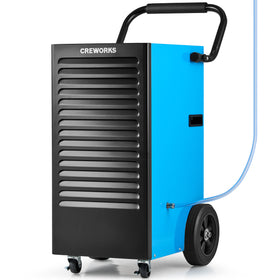
Looking for effective dehumidification in larger spaces? Creworks has the solution with its commercial dehumidifier, tailored for areas spanning from 500 to 1440 square feet. Ideal for crawl spaces, basements, garages, and warehouses, this 130 ppd powerhouse swiftly eliminates excess moisture and musty odors.
Featuring upgraded condenser and evaporator coils, this crawlspace dehumidifier effectively eliminates 60 ppd at AHAM and an impressive 130 ppd at saturation, maintaining a reliably dry environment. The detachable display panel ensures easy adjustment of the timer, humidity levels, and modes. Place your order today and finally eliminate unpleasant odors, unhealthy mold, microbes, and uncomfortable dampness with this efficient room dehumidifier!
The appearance of mold is usually one of the signs that you need a dehumidifier. Many people think dehumidifiers only matter in obviously wet basements. In reality, they can improve many indoor environments.
Indoor humidity that remains too high can create an ongoing risk. Bathrooms, laundry rooms, bedrooms with poor airflow, crawlspaces, and basements are common trouble spots.
By drying the air, a dehumidifier can help keep conditions less favorable for mold growth. This is especially useful in climates where outdoor humidity stays high for much of the year.
Removing musty smells is one of the most common uses of a dehumidifier at home. That stale, damp odor people often notice in older rooms or basements is commonly tied to moisture and microbial activity.
When the air becomes drier, those smells often improve significantly. Even if the room is not visibly moldy, the odor alone may signal excess humidity.
High humidity often makes rooms feel heavy, sticky, and stagnant. Lowering moisture levels can make a room feel fresher and more breathable.
Many people notice better sleep and greater comfort once damp rooms are controlled.
Dust mites tend to prefer humid environments. Lower humidity can help make conditions less favorable for them, which may benefit allergy-prone households.
Excess moisture can damage more than walls. It can affect clothing in closets, paper storage boxes, electronics, wood furniture, tools, and other items like books and photographs. A dehumidifier can quietly protect belongings over time.

A dehumidifier is valuable, but mold control works best when approached logically and completely. The best approach usually is to clean the existing mold, bring in the dehumidifier, and find the source of the mold. Follow these 5 steps for dealing with mold in a room.
This is the most important step. If mold keeps returning, moisture is usually still entering or lingering somewhere. Common causes include:
If the moisture source remains, mold often returns, no matter how much cleaning you do.
Small surface mold on hard, non-porous materials may sometimes be cleaned appropriately. But porous materials such as drywall, insulation, carpet padding, and ceiling tiles may need removal if deeply affected.
That is because mold can root below the visible surface.
If the problem is large, recurring, or hidden, professional remediation is often the smartest route.
Still air allows moisture to collect. Helpful improvements may include exhaust fans in bathrooms, running range hoods while cooking
Flooding, leaks, spills, or plumbing issues should be dried fast. The longer materials stay wet, the greater the mold risk.
Once the visible mold issue is addressed, humidity control helps stop repeat problems. That is where many homeowners finally solve a recurring issue.
If you are buying a dehumidifier for a large mold-prone space, you cannot simply “buy the cheapest big one.” Your real objective should be to choose a dehumidifier size and capacity that can reliably maintain healthy humidity levels across the actual room conditions.
Large basements, garages, open-plan lower floors, and multi-room damp areas often need more performance than packaging claims suggest. A machine that is technically rated for the square footage may still struggle in real use.
A dehumidifier does not usually “remove mold” in the sense of cleaning colonies off walls or reversing damaged materials. What it does, often extremely well, is remove the moisture conditions that allow mold to thrive.
That makes it one of the most useful tools for stopping spread, preventing recurrence, reducing musty odors, and improving room comfort. If mold already exists, think bigger than the machine alone: fix leaks, clean or remove affected materials, improve airflow, and then use humidity control to keep the room stable afterward.
Used with the right strategy, a dehumidifier is less of a magic cure and more of a powerful long-term ally in creating a cleaner, healthier home.



Leave a comment