
Certified Business
With over 10000+ orders
With over 10000+ orders
If you have rooms or sections in your house that constantly feel damp, smell a little musty, or just never seem to dry out, you likely already have the problem a dehumidifier is designed to fix. But a dehumidifier is much more than just a quick fix. Running a dehumidifier can improve comfort, protect your home, and even impact your health, as long as you can choose the right one for the right reason.

A dehumidifier’s core job is simple: it removes excess moisture from the air. When you run one at home, it plays several roles, from controlling humidity levels to improving your HVAC system. Here are the top six roles a dehumidifier plays in a home setting:
The job of a dehumidifier is to pull in humid air, cool it so that moisture condenses into water, and then release drier air back into the room. When you run it at home, it keeps indoor humidity in the ideal range (typically 30–50%), making your home feel more comfortable and less sticky.
If your home is in a particularly humid state like Alaska, Mississippi, or Florida, you will need a dehumdifier for this purpose. It also helps even if the area is not humid, but your home is poorly ventilated or just has limited airflow.
Dehumidifiers remove mold, especially from crawl spaces. By reducing moisture, the dehumdifier regulates and controls the environment, which makes it unconducive for mold and mildew to grow. It essentially stops mold before it starts, especially in hidden areas like behind furniture, in closets, or in basements.
If your home has a large basement or a number of crawl spaces, you almost certainly need a dehumidifier. You also need one if you are trying to get rid of mold in an older home or a home with past water damage issues.
Explore how to choose the best dehumidifier for your crawl space
A dehumidifier removes the damp conditions that cause that “basement smell. When you put a dehumidifier in a basement, your home smells fresher, even if you do not rely on air fresheners.
If your home has carpets in damp areas, many rooms, or many dedicated to storage (boxes, fabrics, etc.), you might want to consider a dehumidifier for basements. Many vacation homes that sit closed up for long periods during the year also need dehumidifiers.
A dehumidifier keeps moisture levels low enough to prevent damage. This is one of the miscellaneous roles of a dehumdifier in a home because it simultaneously:
If your home has a lot of hardwood flooring, a library, workshops, or garages, or valuable furniture or collections, having a dehumidifier prevents a lot of expensive damage.
A dehumidifier removes moisture from the air and also reduces allergens like mold spores and dust mites, which thrive in humidity. Having one at home makes breathing easier for everyone, especially for family members or visitors with allergies or asthma.
If you have a lot of allergy sufferers at home, or many pets, having a dehumidifier plays a crucial but often underrated role in making sure everyone is healthy and happy.
Taking moisture off the air reduces the load on your air conditioning system. With a dehumidifier assisting, your AC cools more efficiently, your energy bills are lower, and you get a more consistent indoor temperature. This can be a double advantage, especially if you live in a state that is both warm and humid. It is also a very efficient solution if the AC runs constantly, but your home still feels sticky.
 6 Signs Your Home Needs a Dehumidifier
If your home consistently feels damp, sticky, or slow to dry, especially in warmer months, you likely have excess humidity, which means you need a dehumidifier. Here are seven signs that your home needs a dehumidifier:
If you are noticing more than one of these, a dehumidifier might not be optional anymore; it may actually be a necessity at this point.
It is important to know exactly what you want from a dehumidifier before buying one. The goal should be to buy a dehumidifier with enough capacity to match the size of your home (or garage) and the moisture levels you are dealing with.
There are dehumidifiers of all sizes and designs, and they are optimized for different needs. Are you trying to prevent mold? Make your home more comfortable? Protect wood floors or furniture?
 Home Dehumidifier Size Guide
| Room Condition | Room Size | Recommended Capacity | Best Type |
| Slightly damp (occasional humidity) | Up to 500 sq ft | 20–30 pint | Small portable unit |
| Moderately damp (musty smell, minor condensation) | 500–1,500 sq ft | 30–50 pint | Mid-size portable |
| Very damp (visible moisture, frequent condensation) | 1,500–2,500 sq ft | 50–70 pint | Large-capacity unit |
| Wet spaces (basements, water intrusion issues) | 2,000+ sq ft | 70+ pint | Heavy-duty or basement model |
| Whole-home control | Entire house | Whole-home system | HVAC-integrated dehumidifier |
If you’re unsure, go slightly bigger. Undersized units struggle and run constantly.
Some commercial dehumidifiers thrive in basements, whereas others thrive in expansive industrial settings. If excess humidity, musty smells, or even mold have your basement in a wet, musty, and unsightly state, then getting a proper-sized dehumidifier is the most practical solution.
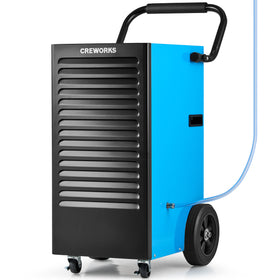
For a basement that is roughly 500 to 1440 square feet, consider this 130 PPD Commercial Dehumidifier from Creworks. It is tailored for areas spanning from 500 to 1440 square feet. Ideal for crawl spaces, basements, garages, and warehouses, and is excellent for swiftly eliminating excess moisture and musty odors. It is compact enough to accommodate tight crawl spaces, and it packs sufficient power to service rooms of a much larger scale.
Knowing how to use a dehumdifier will not matter much if you place it wrongly. As a rule, you want to place your home dehumidifier in the part of the home where the moisture is highest, specifically in a spot that is far from the walls (at least 6–12 inches) and has good airflow all around.

The basement: The most common and effective placement. This is usually ground zero for moisture problems.
A dehumidifier is one of those upgrades that quietly improves everything: comfort, air quality, and even the lifespan of your home. The key is not just buying one, but buying the right one for the right reason.
If your home feels damp, smells foul, or shows any signs of excess moisture, this is one of the simplest ways to fix it, and once you notice the difference, it’s hard to go back.
You may also be interested in what the best setting for a dehumidifier is, and why that matters, especially when you are operating it at home.



Leave a comment